
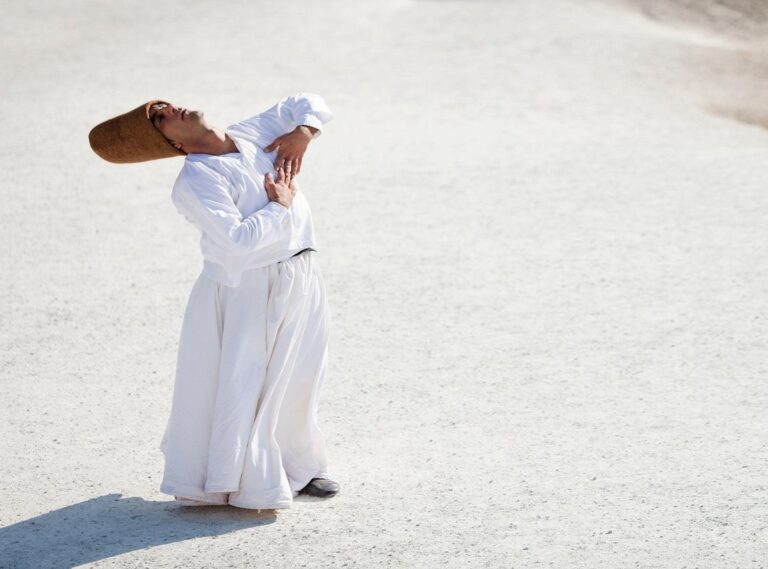
Many of us seek profound spiritual peace and connection, and the Tahajud night prayer offers just that. This article aims to provide a clear, comprehensive guide to the doa tahajud rumi dan jawi.
You’ll find the complete prayer text in both easy-to-read Rumi (Romanized) script and the traditional Jawi script.
We also include a step-by-step tutorial on how to perform the prayer and a full English translation to deepen your understanding.
This resource is designed to be accessible for both beginners and those looking to refresh their knowledge.
What Makes the Tahajud Prayer So Special?
The Tahajud prayer is a voluntary, special prayer performed in the later part of the night after waking from sleep. It’s not mandatory, but it holds deep significance in Islam.
- Definition: A voluntary, special prayer performed in the later part of the night.
- Significance: Mentioned as a practice of the righteous that brings one closer to God.
- Benefits:
- Seeking forgiveness
- Having prayers answered
- Attaining inner peace
The terms ‘Rumi’ and ‘Jawi’ might be confusing. Rumi is the Romanized, phonetic spelling for easy pronunciation. Jawi, on the other hand, is the traditional Arabic-based script.
Performing the doa tahajud rumi dan jawi is considered a powerful act of devotion and discipline. It shows a deep commitment to faith and a desire to connect with God.
How to Perform Tahajud: A Step-by-Step Walkthrough
Tahajud, also known as the night prayer, is a voluntary act of worship that brings immense spiritual benefits. The best time for this prayer is during the last third of the night, between Isha and Fajr prayers.
-
Perform Wudu (Ablution): Start by making sure you are in a state of purity. This involves washing your hands, mouth, nose, face, arms, head, and feet.
-
Make the Intention (Niyyah): Before you begin, make a sincere intention to pray Tahajud. This is a crucial step and sets the tone for your prayer.
The structure of the Tahajud prayer consists of cycles of two Rak’ahs. You can perform a minimum of two Rak’ahs, but it’s common to do up to eight. It’s up to you, based on your comfort and time.
In each Rak’ah, recite Surah Al-Fatiha followed by another Surah from the Quran. The choice of the Surah is flexible, so pick one that resonates with you.
After completing the Rak’ahs, it’s typical to conclude with the Witr prayer if you haven’t already done so. The Witr prayer is an odd-numbered prayer, usually three or one Rak’ah, and it’s a key part of the night prayer.
Sometimes, you might accidentally oversleep and miss the ideal time for Tahajud. Don’t worry; the intention is what matters most. If you wake up and still want to pray, go ahead.
Allah knows your intentions.
Doa tahajud rumi dan jawi is a beautiful supplication often recited after the prayer. It adds a personal touch and helps in deepening your connection with Allah. Biszoxtall
Remember, the exact timing and number of Rak’ahs can vary, and there’s no one-size-fits-all approach. The key is consistency and sincerity.
The Tahajud Supplication (Doa) in Traditional Jawi Script

Below is the complete Tahajud prayer in its original Jawi/Arabic script. This is the traditional form of the prayer, revered for its authenticity and spiritual weight.
Insert a large, clear, and high-quality image or embedded text of the doa tahajud rumi dan jawi here.
Take your time with the text. Focus on the beauty of the calligraphy and the sacredness of the words. It’s a way to connect more deeply with the prayer’s origin.
Respecting the script is crucial. Be in a state of cleanliness when handling it. This shows reverence and helps you stay mindful of the prayer’s significance.
For those who can read Arabic, reciting from this script can be a profound experience. It allows you to connect more deeply with the spiritual essence of the prayer.
Easy Pronunciation: The Tahajud Prayer in Rumi with English Translation
Reciting the doa tahajud rumi can be a deeply moving experience, but it’s not always easy if you’re not familiar with the language. Understanding the meaning of the prayer is just as important as reciting it correctly.
Here’s a line-by-line breakdown to help you pronounce and understand the doa tahajud rumi:
| Rumi Transliteration | English Translation |
|---|---|
| Subhanaka allahumma | Glory be to You, O Allah |
| wa bihamdika | and by Your praise |
| wa tabarakasmuka | and blessed be Your name |
| wa ta’ala jadduka | and exalted be Your majesty |
| wa la ilaha ghairuka | and there is no god but You |
This version helps bridge the language gap, allowing individuals to connect with the prayer’s powerful message regardless of their Arabic proficiency.
The doa tahajud rumi dan jawi is a beautiful way to express devotion and seek divine guidance. Reciting it with understanding enhances the spiritual experience.
The supplication praises God’s greatness and asks for light, guidance, and mercy.
Embracing the Blessings of the Night Prayer
Tahajud, a night prayer, is a profound and significant practice in Islam. It offers a unique opportunity for spiritual connection and reflection. This guide has provided you with the meaning, significance, and a step-by-step method to perform Tahajud. doa tahajud rumi dan jawi have also been included, giving you the complete prayer in both scripts.
You now have all the tools needed to confidently incorporate this beautiful practice into your life. Remember, Tahajud is a direct and personal conversation with God during a time of immense peace and blessing.
Try setting your alarm just 15 minutes earlier tonight to experience its tranquility for yourself.
 Susana Pasleyowns has opinions about tech stack optimization tricks. Informed ones, backed by real experience — but opinions nonetheless, and they doesn't try to disguise them as neutral observation. They thinks a lot of what gets written about Tech Stack Optimization Tricks, Core Tech Concepts and Insights, AI and Machine Learning Ideas is either too cautious to be useful or too confident to be credible, and they's work tends to sit deliberately in the space between those two failure modes.
Reading Susana's pieces, you get the sense of someone who has thought about this stuff seriously and arrived at actual conclusions — not just collected a range of perspectives and declined to pick one. That can be uncomfortable when they lands on something you disagree with. It's also why the writing is worth engaging with. Susana isn't interested in telling people what they want to hear. They is interested in telling them what they actually thinks, with enough reasoning behind it that you can push back if you want to. That kind of intellectual honesty is rarer than it should be.
What Susana is best at is the moment when a familiar topic reveals something unexpected — when the conventional wisdom turns out to be slightly off, or when a small shift in framing changes everything. They finds those moments consistently, which is why they's work tends to generate real discussion rather than just passive agreement.
Susana Pasleyowns has opinions about tech stack optimization tricks. Informed ones, backed by real experience — but opinions nonetheless, and they doesn't try to disguise them as neutral observation. They thinks a lot of what gets written about Tech Stack Optimization Tricks, Core Tech Concepts and Insights, AI and Machine Learning Ideas is either too cautious to be useful or too confident to be credible, and they's work tends to sit deliberately in the space between those two failure modes.
Reading Susana's pieces, you get the sense of someone who has thought about this stuff seriously and arrived at actual conclusions — not just collected a range of perspectives and declined to pick one. That can be uncomfortable when they lands on something you disagree with. It's also why the writing is worth engaging with. Susana isn't interested in telling people what they want to hear. They is interested in telling them what they actually thinks, with enough reasoning behind it that you can push back if you want to. That kind of intellectual honesty is rarer than it should be.
What Susana is best at is the moment when a familiar topic reveals something unexpected — when the conventional wisdom turns out to be slightly off, or when a small shift in framing changes everything. They finds those moments consistently, which is why they's work tends to generate real discussion rather than just passive agreement.